
| Premium large car; Built in Canada |
|
|
| Good condition price range: $1,000 – $2,100* |
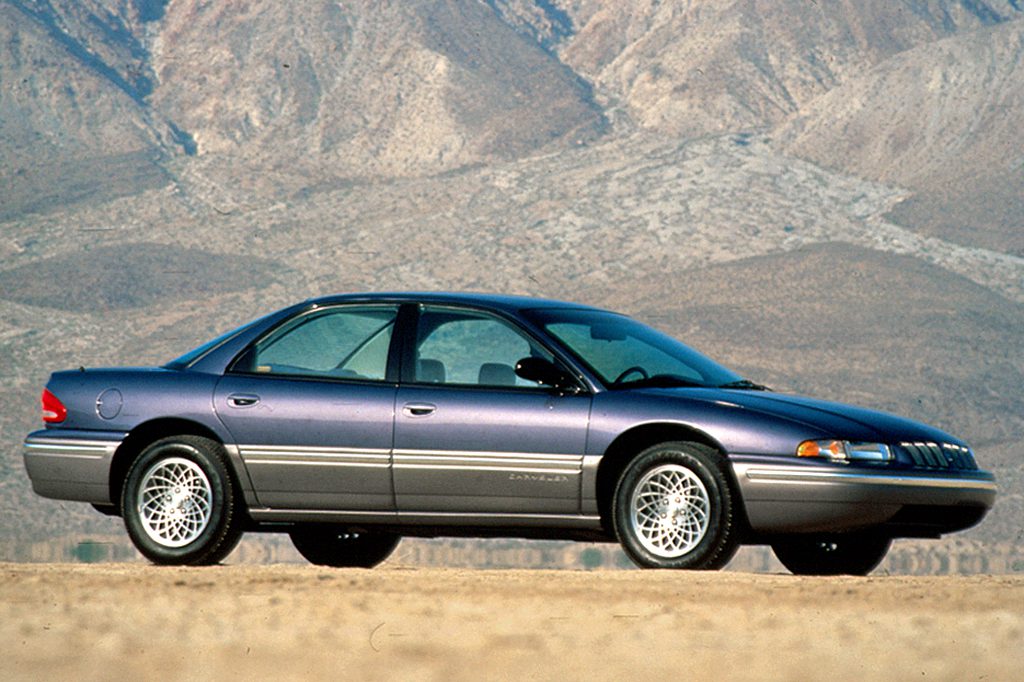
1993 Chrysler Concorde
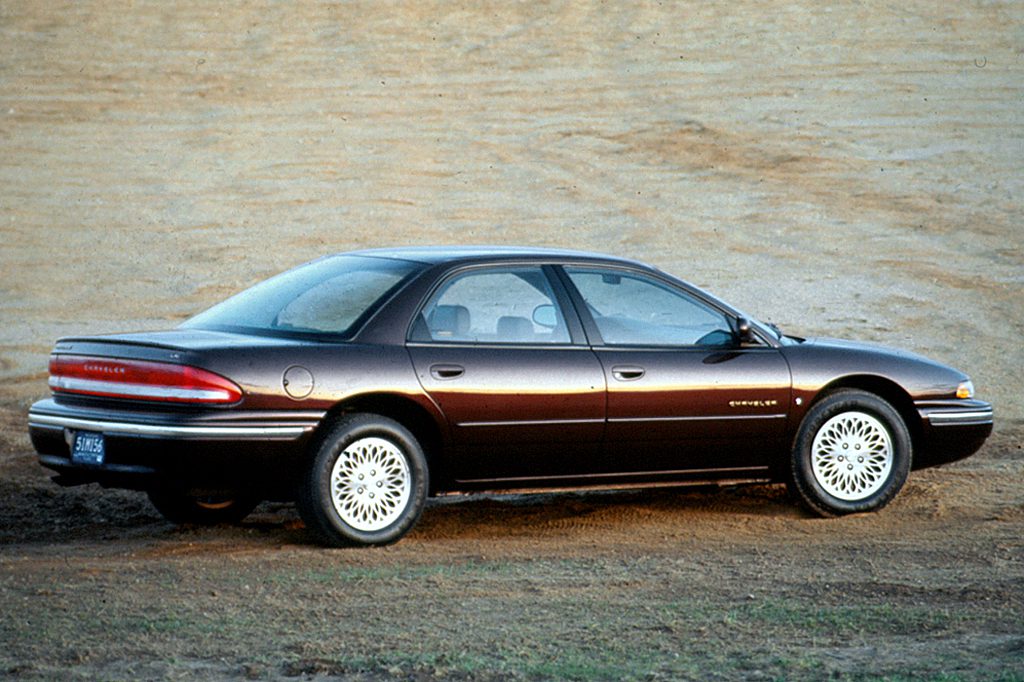
1996 Chrysler Concorde LXi
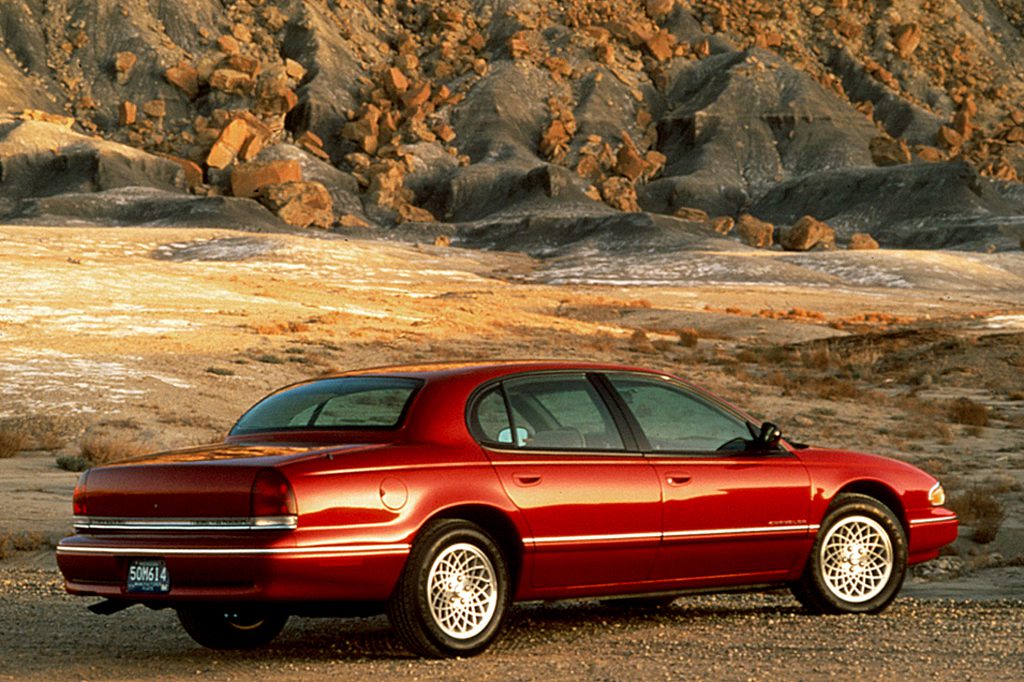
1994 Chrysler New Yorker
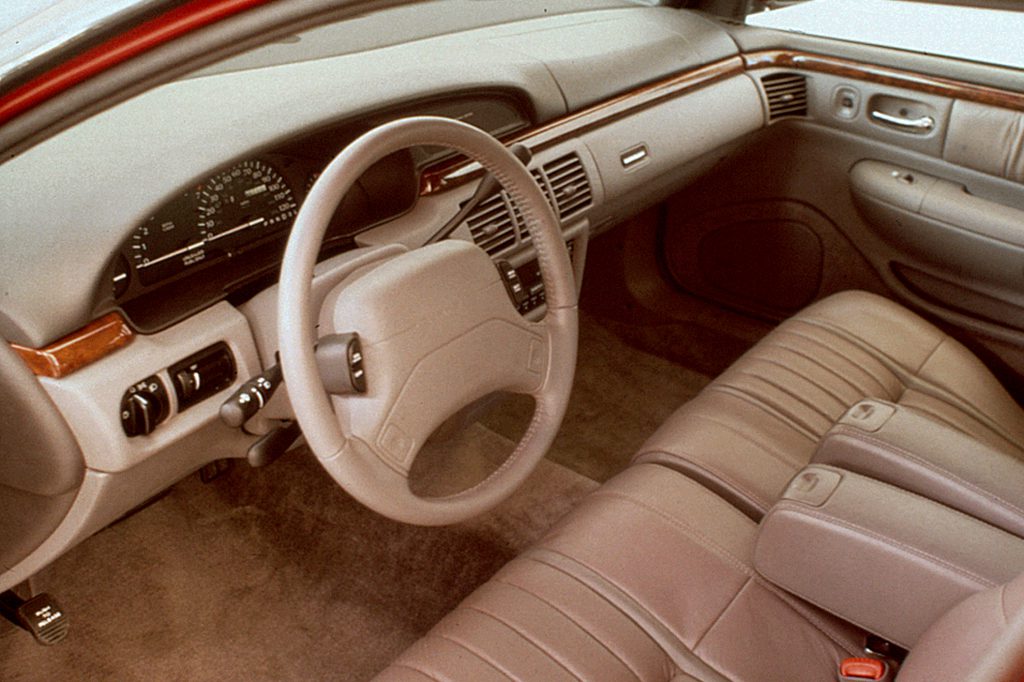
1994 Chrysler New Yorker interior
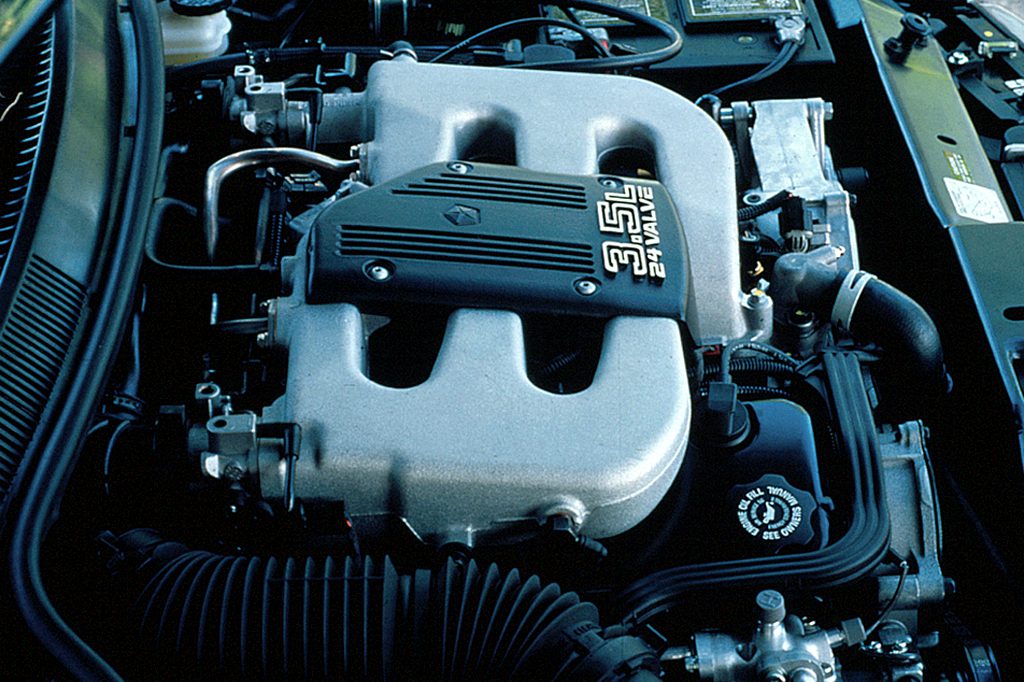
1994 Chrysler Concorde 3.5-liter engine
| Pros: |
|
| Cons: |
|
Built in Canada, the front-drive Concorde sedan was the luxury version of Chrysler’s “LH” trio (which also includes Dodge Intrepid and Eagle Vision). The “cab-forward” body rode a rather long 113-inch wheelbase, which helped enlarge the interior. Driver- and passenger-side airbags were standard. So was antilock all-disc braking. Traction control has been an option, as has a child safety seat that folds out from the middle of the rear bench. Power comes from either an overhead-valve 3.3-liter V6 or overhead-cam 3.5-liter V6. The only transmission is a 4-speed automatic.
[/vc_column_text][mk_table title=”Yearly Updates” style=”style2″ el_class=”used-yearly-updates”]| 1994 Concorde/New Yorker/LHS Both a sporty LHS and revived luxury New Yorker joined as early ’94 models on the Concorde’s wheelbase but five inches longer overall. Both are roomier in back and use only the 214-horsepower engine. New Yorkers cost less when new, and had a split front bench seat instead of the LHS’s buckets. Variable-assist power steering also arrived after the cars debuted. Initially optional in Concordes, the touring suspension became standard this year. Also on the Concorde, base engines gained eight horsepower, and a 3-place front bench seat became available. Power steering added more assist, to reduce turning effort for parking but deliver greater feel at higher speeds. |
| 1995 Concorde/New Yorker/LHS Except for a modification to the optional remote keyless entry system, and addition of a cancel feature to their cruise control, not much changed in the Concorde, LHS, or New Yorker. |
| 1996 Concorde/New Yorker/LHS The New Yorker model entered its final season in ’96, after which the Concorde and LHS would carry on. Extra sound insulation and revised structural engineering promised to make these sedans quieter. The LHS got a new antenna, built into the back window. |
| 1997 Concorde/New Yorker/LHS Chrysler made only one major change for 1997, in anticipation of an all-new Concorde for 1998. The 3.3-liter V6 was dropped as the standard powerplant for the base LX model. The LHS returns virtually unchanged. |
[/vc_column_text][vc_column_text disable_pattern=”true” align=”left” margin_bottom=”24″ el_class=”used-powertrain-text”]Both the basic 3.3-liter V6 and the 214-horsepower (24-valve) 3.5-liter V6 work through a 4-speed electronically controlled automatic transmission. The 3.3-liter engine jumped from 153 to 161 horsepower for 1994. A flex-fuel option became available that year, running on a mixture of gasoline and methanol, but few are likely to be on sale secondhand.[/vc_column_text][/vc_column_inner][vc_column_inner width=”1/2″][mk_table style=”style2″ el_class=”used-engine-specs”]
| ohv V6 | ||
| Engine Size (liters/cubic inches) | 3.3/201 | |
| Engine HP | 153-161 | |
| Engine Torque (lb-ft) | 181 | |
| Avail. Trans. | EPA MPG (city/hwy) | MPG avg. as tested |
| 4-speed automatic | 19/27 | |
| ohc V6 | ||
| Engine Size (liters/cubic inches) | 3.5/215 | |
| Engine HP | 214 | |
| Engine Torque (lb-ft) | 221 | |
| Avail. Trans. | EPA MPG (city/hwy) | MPG avg. as tested |
| 4-speed automatic | 18/26 | 19.1 |
The unusually long wheelbase translates to ample leg room front and rear, while the sleek “cab-forward” profile pushes wheels out to the corners for exceptional backseat width. Three large adults can ride in the rear without crowding, and cargo space is ample. A low waistline and large windows add to the impression of spaciousness. Wide door openings ease entry/exit. New Yorker/LHS sedans offer all the space in the Concorde, and more yet for rear occupants.
With the Touring Package, the all-independent suspension delivers crisp, assured handling and a comfortable, controlled ride. The base ’93 suspension isn’t bad, but permits more body and wheel motion over large humps and dips.
Performance ranks only as adequate with the smaller engine. The bigger 24-valve V6 is a bit gruff under load, but offers more pulling power. Acceleration is definitely quick, but won’t slam anyone into the seat. Reaching 60 mph took just 8.2 seconds with the 3.5-liter engine. The 3.3-liter takes about two seconds longer. Either way, the automatic transmissions shift smoothly. Fuel economy is about right for this league, even if it won’t win any awards with either engine.
A well-arranged dashboard contains clear gauges and logical controls, though some interior trim is on the plasticky side. Climate controls, mounted low and in the center, are difficult to adjust while driving. Interior noise levels are low, but road noise can be noticeable in all LH sedans. Visibility to the rear is restricted by a narrow back window in the LHS/New Yorker.
[/vc_column_text][/vc_column_inner][vc_column_inner width=”1/2″][mk_content_box icon=”icon-road” heading=”Ratings” el_class=”ratings-box”][vc_column_text disable_pattern=”true” align=”left” margin_bottom=”18″]Model Tested: 1994 Chrysler Concorde 3.5-liter[/vc_column_text][vc_column_text disable_pattern=”true” align=”left” margin_bottom=”18″ el_class=”review-slideshow-caption”]Ratings values are on a 1-10 scale, with 10 being the best. With the exception of Value, these numbers reflect how the vehicle compares against the universe of vehicles, not just against rivals in its class.[/vc_column_text][vc_column_text disable_pattern=”true” align=”left” margin_bottom=”0″ el_class=”used-performance-ratings” title=”Performance”][mk_skill_meter title=”Acceleration – 7″ percent=”70″ color=”#0bb697″][mk_skill_meter title=”Fuel Economy – 4″ percent=”40″ color=”#0bb697″][mk_skill_meter title=”Ride Quality – 6″ percent=”60″ color=”#0bb697″][mk_skill_meter title=”Steering/Handling – 6″ percent=”60″ color=”#0bb697″][mk_skill_meter title=”Quietness – 6″ percent=”60″ color=”#0bb697″][/vc_column_text][vc_column_text disable_pattern=”true” align=”left” margin_bottom=”0″ title=”Accommodations” el_class=”used-accomodations-ratings”][mk_skill_meter title=”Controls/Materials – 6″ percent=”60″ color=”#0bb697″][mk_skill_meter title=”Room/Comfort Front – 7″ percent=”70″ color=”#0bb697″][mk_skill_meter title=”Room/Comfort Rear – 7″ percent=”70″ color=”#0bb697″][mk_skill_meter title=”Cargo Room – 5″ percent=”50″ color=”#0bb697″][/vc_column_text][vc_column_text disable_pattern=”true” align=”left” margin_bottom=”0″ title=”Other” el_class=”used-other-ratings”][mk_skill_meter title=”Value – 8″ percent=”80″ color=”#0bb697″][/vc_column_text][vc_column_text disable_pattern=”true” align=”left” margin_bottom=”0″ el_class=”used-ratings-total”]Total: 62
[/vc_column_text][/mk_content_box][/vc_column_inner][/vc_row_inner][/vc_column][/mk_page_section][mk_page_section attachment=”scroll” bg_position=”left top” bg_repeat=”repeat” bg_stretch=”false” enable_3d=”false” speed_factor=”4″ bg_video=”no” video_mask=”false” video_opacity=”0.6″ top_shadow=”false” section_layout=”full” sidebar=”General” min_height=”100″ padding_top=”10″ padding_bottom=”10″ margin_bottom=”0″ first_page=”false” last_page=”true” section_id=”Specs”][vc_column width=”1/1″][vc_row_inner][vc_column_inner width=”1/2″][vc_column_text title=”Specifications” disable_pattern=”true” align=”left” margin_bottom=”0″][mk_table style=”style2″ el_class=”used-model-specs”]| 4-door sedan | ||||||||||||||||||||||||
| Wheelbase (in.) | Length (in.) | Width (in.) | Height (in.) | Weight (lbs) | ||||||||||||||||||||
| 113.0 | 201.5 | 74.4 | 56.3 | |||||||||||||||||||||
|
||||||||||||||||||||||||
| 4-door sedan | ||||||||||||||||||||||||
| Wheelbase (in.) | Length (in.) | Width (in.) | Height (in.) | Weight (lbs) | ||||||||||||||||||||
| 113.0 | 207.4 | 74.5 | 55.9 | |||||||||||||||||||||
|
||||||||||||||||||||||||
Front Impact Test
[mk_skill_meter title=”Driver Injury – 4″ percent=”80″ color=”#0bb697″][mk_skill_meter title=”Front Passenger Injury – 4″ percent=”80″ color=”#0bb697″]Side Impact Test
[mk_skill_meter title=”Driver Injury – N/A” percent=”N/A0″ color=”#0bb697″][mk_skill_meter title=”Rear Passenger Injury – N/A” percent=”N/A0″ color=”#0bb697″][/vc_column_text][vc_column_text title=”HLDI” disable_pattern=”true” align=”left” margin_bottom=”0″ el_class=”used-hldi-ratings-head”] [/vc_column_text][mk_table style=”style2″ el_class=”used-hldi-ratings”]| Collision | 88 |
| Injury | 62 |
| Theft | 81 |
| Automatic transmission Description: A transmission shudder under light-to-moderate acceleration is caused by a leaking front pump due to a worn bushing, which requires replacement of the pump as well as the torque converter. (1993-96) |
| Automatic transmission Description: Bad seals in the transmission lead to premature friction component wear, which causes shudder when starting from a stop. (1993-95) |
| Automatic transmission Description: A defective throttle-position sensor, not a transmission problem, could be the cause of late, erratic, or harsh shifting. (1994) |
| Automatic transmission Description: Automatic transaxles could take several seconds to engage at startup because of a problem with the valve body. (1993-95) |
| Engine noise Description: The motor mount on the left side of the engine tends to break. (1992-93) |
| Engine noise Description: Hard starting and a miss at idle can be traced to defective fuel rails. (1993-94) |
| Engine noise Description: Clatter in the valve train on 3.5-liter V6 may be due to damaged rockers and camshaft. Revised parts are available. (1993-96) |
| Vehicle noise Description: If front end makes a squawking noise over bumps, strut striker caps may need to be replaced. (1998-2000) |
| 1993 w/3.3-liter engine Description: Deterioration of O-rings at fuel-injector tubes can cause fuel leakage, with potential for fire. |
| 1993-95 Concorde, LHS Description: Lower control-arm attaching brackets on some cars can crack due to fatigue and separate from engine cradle; transmission halfshaft could then pull out of transaxle. |
| 1993-97 w/3.5-liter engine Description: Fuel-injection system can leak from O-rings or hairline cracks in fuel-injection rail. |
| 1994 Description: Right steering tie rod can rub through automatic-transmission wiring harness, causing short circuit; may result in stalling, or allow engine to start when selector is not in “Park” position. |