

Pros: Pleasant driving manners; user-friendly control layout; cargo versatility of hatchback body style; choice of powertrains
Cons: Ioniq Hybrid’s powertrain is not as smooth or refined as rival hybrid vehicles; Toyota-Prius-like split rear-window layout compromises rear visibility; not all testers like Ioniq Electric’s push-button shifter
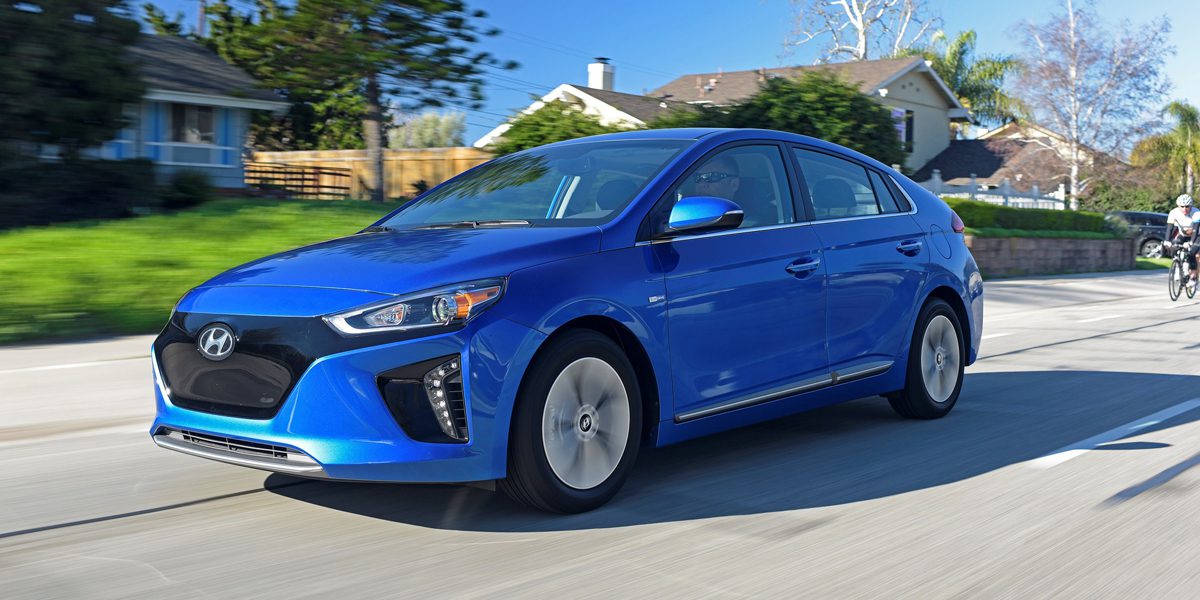
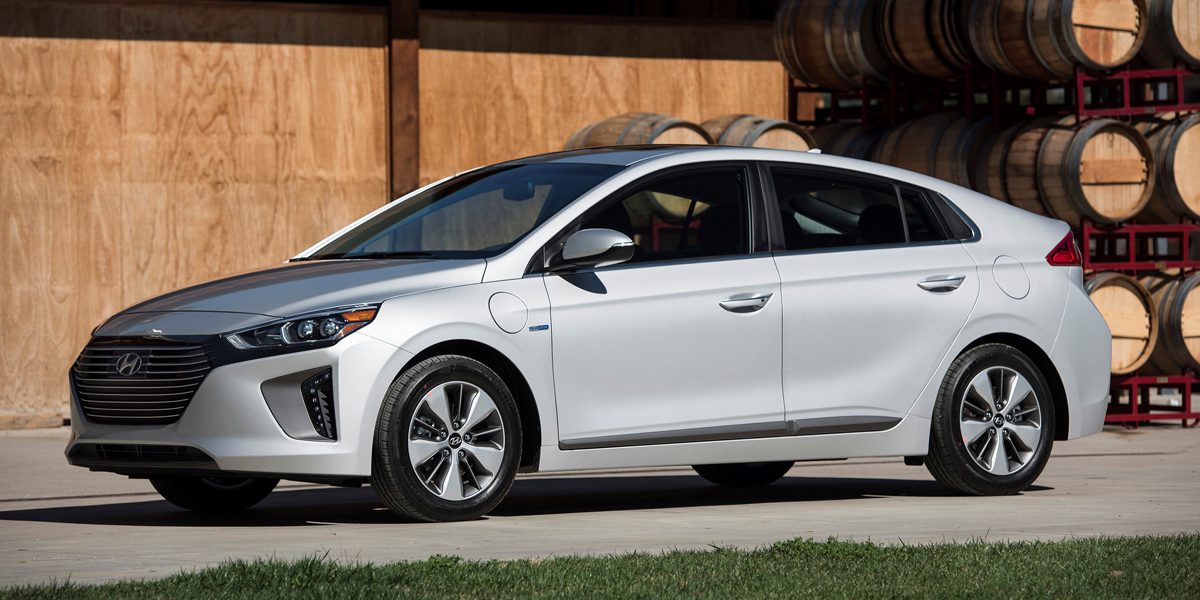
CG Says: The 2019 Hyundai Ioniq adds a driver-attention monitor and automatic high-beam headlights. Hyundai introduced an eco-focused compact-car line for 2017. The Ioniq is a compact four-door hatchback that offers a choice of three electrified powertrains: gas/electric hybrid, plug-in hybrid, and pure-electric. Hybrid and plug-in hybrid combine a 1.6-liter 4-cylinder gas engine with an electric motor. The hybrid produces a combined 139 horsepower and the plug-in hybrid, even though it has a larger electric motor, is also rated at 139 hp. The plug-in hybrid can be driven an estimated 29 miles solely on electric power. Both the hybrid and plug-in hybrid use a 6-speed automated-manual transmission. The electric is only available in certain states (California, Connecticut, Maine, Maryland, Massachusetts, New Jersey, New York, Oregon, Rhode Island, Vermont) and has 118 hp with an estimated driving range of 124 miles. Available safety features include forward collision warning and mitigation with pedestrian detection, lane-departure warning, blind-spot alert, lane–keep assist, and rear cross-traffic alert. The 2019 Hyundai Ioniq lineup is aimed squarely at the Toyota Prius family, as well as the Chevrolet Volt and Bolt EV. Though its Chevrolet and Toyota competitors trump the Ioniq on a couple of key specs, we’re still impressed with the everyday passenger/cargo practicality of the Ioniq platform and the smooth, peppy driving character of the Ioniq Electric. However, we’re less impressed with the non-linear behavior of the Ioniq Hybrid’s gas/electric powertrain, and the disappointing fuel economy our test Ioniq Hybrid achieved compared to our 2017 Toyota Prius Eco test vehicle.
| Class | Compact Car |
| Body Style(s) | 4-door hatchback |
| Passenger Count | 5 |
| Drive Wheels | front-wheel drive |
| Manufacturer | Hyundai |
| Nation of Manufacture | South Korea |
| Base Prices | Blue Hybrid: $23,320 SEL Hybrid: $25,870 Limited Hybrid: $29,470 Base Plug-in Hybrid: $26,270 Limited Plug-in Hybrid: $30,270 Base Electric: $30,735 Limited Electric: $37,235 |
| Base Engine 1.6-liter 4-cylinder/electric (Hybrid) |
| Horsepower 139 |
| Std. Transmission 6-speed automated manual |
| Avail. Transmission NA |
| EPA City Range (mpg) 55-57 |
| EPA Hwy Range (mpg) 54-59 |
| Optional Engine 1.6-liter 4-cylinder/electric (Plug-in Hybrid) |
| Horsepower 139 |
| Std. Transmission 6-speed automated manual |
| Avail. Transmission NA |
| EPA Gas Engine Combined (mpg) 52 |
| EPA Electric Engine Combined (MPGe) 119 |
| Optional Engine electric motor (Electric) |
| Horsepower 118 |
| Std. Transmission single speed |
| Avail. Transmission NA |
| EPA City Range (MPGe) 150 |
| EPA Hwy Range (MPGe) 122 |
Test Drive: 2019 Hyundai Ioniq Plug-In Hybrid
Quick Spin: 2018 Hyundai Ioniq Hybrid
Test Drive: 2017 Hyundai Ioniq Hybrid
Test Drive: 2017 Hyundai Ioniq Electric
2019 Los Angeles Auto Show: 2020 Hyundai Ioniq Hybrid, Plug-In Hybrid, and Electric
2016 New York Auto Show: 2017 Hyundai Ioniq
Guide to Electric Vehicle Charging
Consumer Guide Car Stuff Podcast, Episode 8: Bullitt Mustang Auction, EV Tax Credits
Consumer Guide Car Stuff Podcast, Episode 9: Electric Car Myths Debunked, 2021 GMC Yukon