
| Midsize car; Built in USA |
|
|
| Good condition price range: $1,000 – $2,000* |
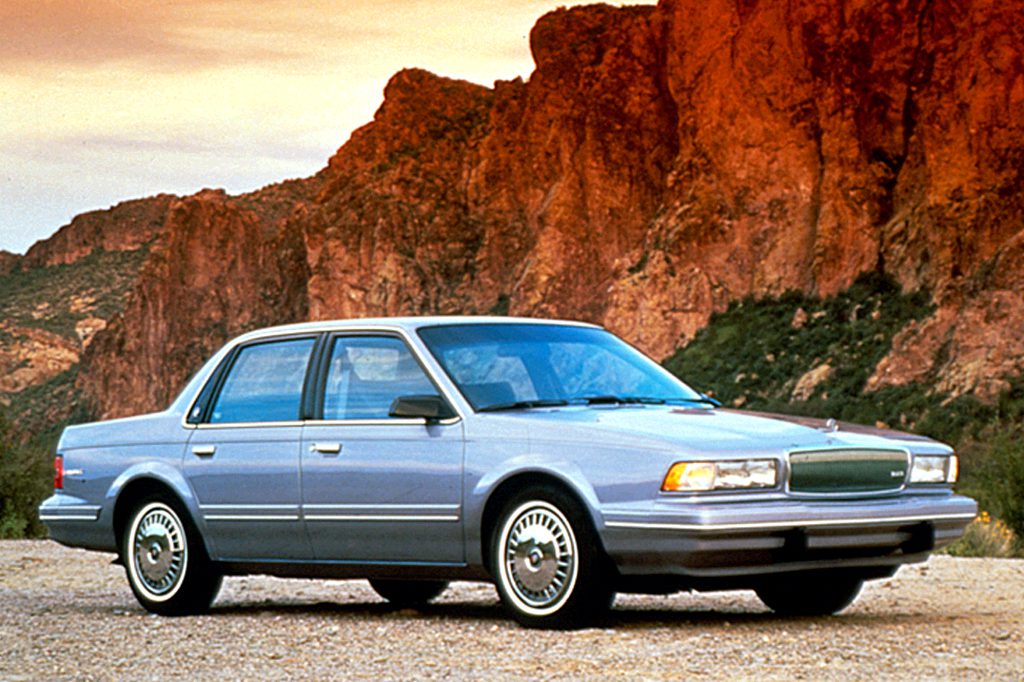
1995 Buick Century Special Edition 4-door sedan
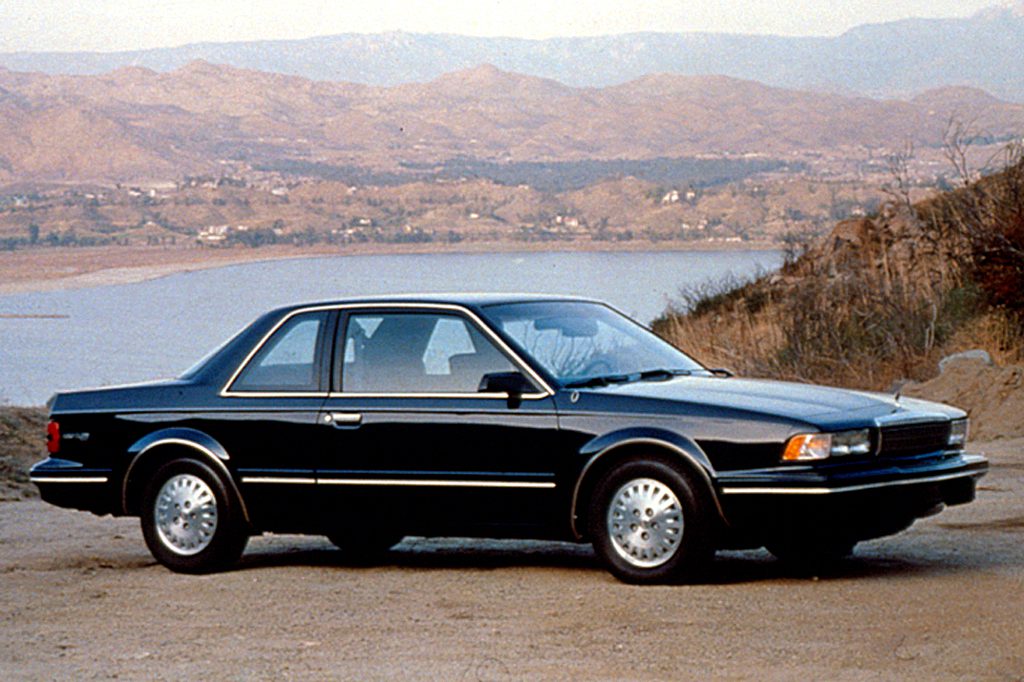
1995 Buick Century Custom 2-door coupe
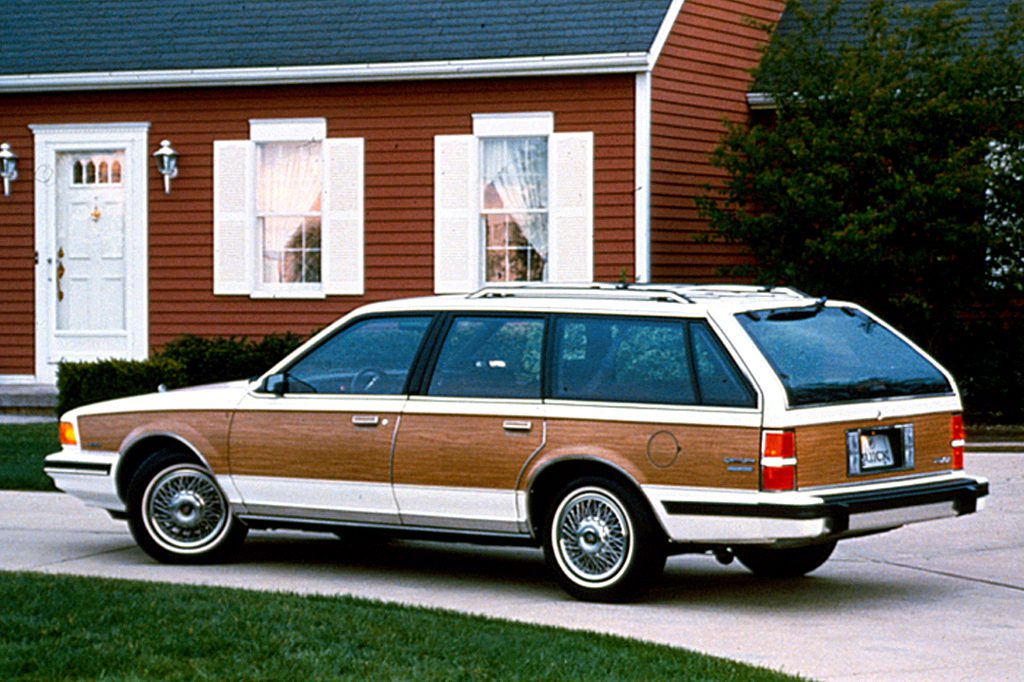
1991 Buick Century Estate 4-door wagon
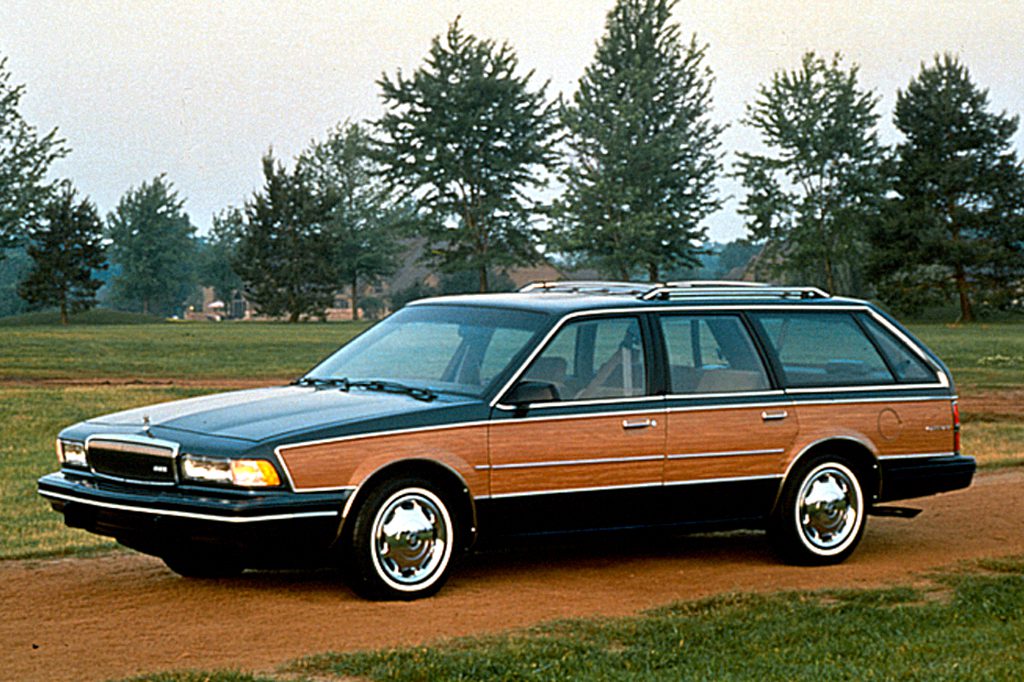
1995 Buick Century Special 4-door wagon
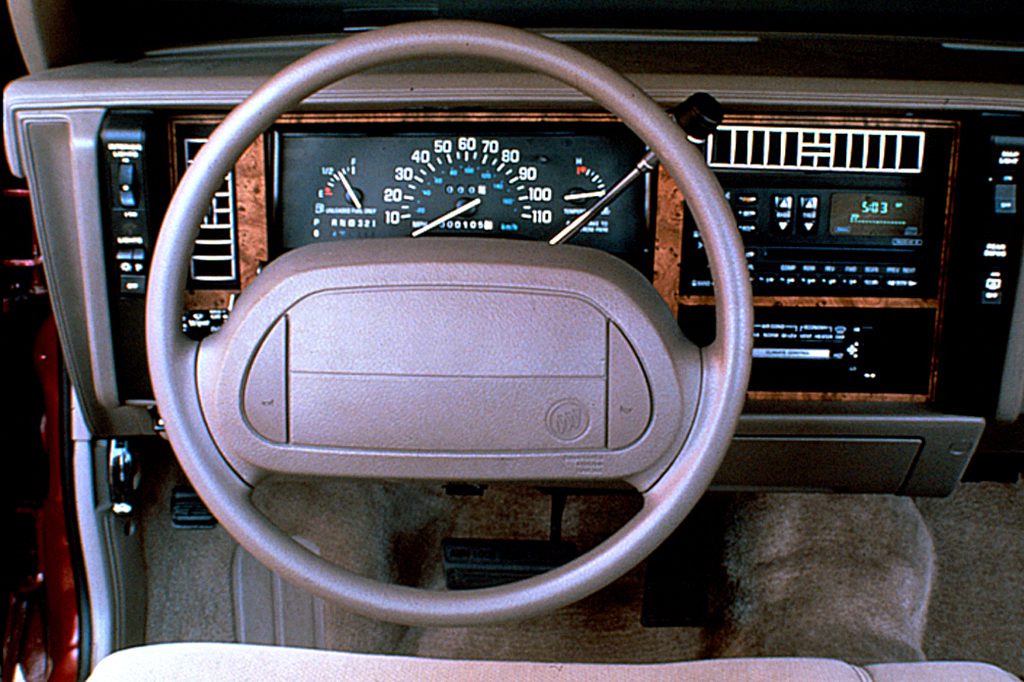
1995 Buick Century interior
| Pros: |
|
| Cons: |
|
Introduced in 1982, like the related Oldsmobile Cutlass Ciera, Chevrolet Celebrity, and Pontiac 6000, Buick’s version of the front-wheel drive intermediate was a longer, plusher derivative of GM’s ill-fated X-car family. Facelifted a bit in ’89, the Century came in coupe, sedan, and station wagon form. The Custom series included all three body styles, while the more costly Limited skipped the coupe. Air conditioning was standard.
[/vc_column_text][mk_table title=”Yearly Updates” style=”style2″ el_class=”used-yearly-updates”]| 1991 Century A new grille, turn signals, and front-end trim gave the Century a fresh front-end look. |
| 1992 Century Only detail changes were evident in the Century coupe, sedan, and wagon. In addition to the Custom and Limited, a Special series went on sale for a lower price. By now, the related Pontiac 6000 and Chevrolet Celebrity were gone, leaving only the Century and Oldsmobile Cutlass Ciera. |
| 1993 Century A driver-side airbag was added for ’93 (optional on the Special, standard on Custom and Limited). A new 2.2-liter 4-cylinder engine replaced the 2.5-liter. Fuel tanks grew from 15.7 to 16.4 gallons, and rub strips and side moldings were now body colored. |
| 1994 Century A driver-side airbag went into all Century models for ’94, along with antilock braking. Loss of the Limited sedan and Custom coupe and wagon left only four models: two sedans, two wagons, and no coupes. A 120-horsepower 2.2-liter 4-cylinder engine replaced the short-lived 110-horsepower version. Also new: a 3.1-liter V6, delivering the same 160 horsepower as its 3.3-liter predecessor. The grille was new, too. |
| 1995 Century A new backlit instrument cluster and new seats were the only significant changes for 1995. |
| 1996 Century Engine coolant now was intended to last 5 years or 100,000 miles, spark plugs expected a 100,000-mile life, and a new stainless-steel exhaust system was supposed to be more durable. Otherwise, the Century showed little change for its final outing in this form. All models now had V6 engines except the Special sedan, in which the V6 was optional. |
[/vc_column_text][vc_column_text disable_pattern=”true” align=”left” margin_bottom=”24″ el_class=”used-powertrain-text”]Engine choices in 1990 included the base 2.5-liter four and an optional “3300” 3.3-liter V6, developing 110 and 160 horsepower, respectively. A 2.2-liter four replaced the 2.5 as base engine during 1993, while a 3.1-liter V6 edged aside the 3.3-liter for ’94, driving an electronic 4-speed automatic transmission. A 3-speed automatic was standard on all other models, but the 4-speed unit could be installed on any Century with a V6 engine.[/vc_column_text][/vc_column_inner][vc_column_inner width=”1/2″][mk_table style=”style2″ el_class=”used-engine-specs”]
| ohv I4 | ||
| Engine Size (liters/cubic inches) | 2.5/151 | |
| Engine HP | 110 | |
| Engine Torque (lb-ft) | 135 | |
| Avail. Trans. | EPA MPG (city/hwy) | MPG avg. as tested |
| 3-speed automatic | 22/31 | |
| ohv I4 | ||
| Engine Size (liters/cubic inches) | 2.2/133 | |
| Engine HP | 110-120 | |
| Engine Torque (lb-ft) | 130 | |
| Avail. Trans. | EPA MPG (city/hwy) | MPG avg. as tested |
| 3-speed automatic | 24/31 | |
| ohv V6 | ||
| Engine Size (liters/cubic inches) | 3.1/191 | |
| Engine HP | 160 | |
| Engine Torque (lb-ft) | 185 | |
| Avail. Trans. | EPA MPG (city/hwy) | MPG avg. as tested |
| 4-speed automatic | 20/29 | 22.3 |
| ohv V6 | ||
| Engine Size (liters/cubic inches) | 3.3/204 | |
| Engine HP | 160 | |
| Engine Torque (lb-ft) | 185 | |
| Avail. Trans. | EPA MPG (city/hwy) | MPG avg. as tested |
| 3-speed automatic 4-speed automatic |
19/26 19/30 |
19.8 |
The rough 2.5-liter 4-cylinder engine is barely adequate for sedans, and weaker yet in the heavier station wagon. A smooth, responsive 3.3-liter V6 delivers ample power at low speeds and a surprisingly strong kick under heavy throttle for brisk highway passing. That engine also is fairly quiet, unlike the noisy standard four. Also, the 2.5-liter four did not prove to be trouble free, and fuel mileage wasn’t much better than the V6. We averaged nearly 20 mpg with a 3.3-liter V6 in mixed city/suburban driving. A four gets only about two mpg more. The 2.2-liter four that replaced the 2.5-liter in 1993 isn’t much improvement, lacking the power to move a car this size with any authority. Adding 10 horsepower to the four for ’94 didn’t make it a tempting choice, either. The 3.1-liter V6 installed in more recent models delivers ample power for passing and spirited takeoffs.
Century’s Dynaride suspension delivers a soft and reasonably good ride, but handling won’t win any awards. The base suspension and narrow standard tires are fine for gentle commuting, but spirited cornering causes the narrow tires to lose their grip. That suspension absorbs most bumps easily, but the front end bounces over wavy surfaces for a floaty, poorly controlled ride. An optional Gran Touring Suspension, with fatter tires, improves cornering ability but results in a harsh ride.
Six adults will fit inside, but four will be far more comfortable. Head and leg room are adequate all around, but three cannot fit across without squeezing. Luggage space is ample, with a deep, wide trunk that has a flat floor. Wagons have an optional rear-facing third seat, for 8-passenger capacity.
Front brakes tend to wear out quickly. Many early problems, including trouble with the rack-and-pinion power steering system, were eventually corrected on the later models.
[/vc_column_text][/vc_column_inner][vc_column_inner width=”1/2″][mk_content_box icon=”icon-road” heading=”Ratings” el_class=”ratings-box”][vc_column_text disable_pattern=”true” align=”left” margin_bottom=”18″]Model Tested: 1994 Buick Century Special sedan[/vc_column_text][vc_column_text disable_pattern=”true” align=”left” margin_bottom=”18″ el_class=”review-slideshow-caption”]Ratings values are on a 1-10 scale, with 10 being the best. With the exception of Value, these numbers reflect how the vehicle compares against the universe of vehicles, not just against rivals in its class.[/vc_column_text][vc_column_text disable_pattern=”true” align=”left” margin_bottom=”0″ el_class=”used-performance-ratings” title=”Performance”][mk_skill_meter title=”Acceleration – 5″ percent=”50″ color=”#0bb697″][mk_skill_meter title=”Fuel Economy – 5″ percent=”50″ color=”#0bb697″][mk_skill_meter title=”Ride Quality – 6″ percent=”60″ color=”#0bb697″][mk_skill_meter title=”Steering/Handling – 4″ percent=”40″ color=”#0bb697″][mk_skill_meter title=”Quietness – 5″ percent=”50″ color=”#0bb697″][/vc_column_text][vc_column_text disable_pattern=”true” align=”left” margin_bottom=”0″ title=”Accommodations” el_class=”used-accomodations-ratings”][mk_skill_meter title=”Controls/Materials – 5″ percent=”50″ color=”#0bb697″][mk_skill_meter title=”Room/Comfort Front – 6″ percent=”60″ color=”#0bb697″][mk_skill_meter title=”Room/Comfort Rear – 4″ percent=”40″ color=”#0bb697″][mk_skill_meter title=”Cargo Room – 4″ percent=”40″ color=”#0bb697″][/vc_column_text][vc_column_text disable_pattern=”true” align=”left” margin_bottom=”0″ title=”Other” el_class=”used-other-ratings”][mk_skill_meter title=”Value – 6″ percent=”60″ color=”#0bb697″][/vc_column_text][vc_column_text disable_pattern=”true” align=”left” margin_bottom=”0″ el_class=”used-ratings-total”]Total: 50
[/vc_column_text][/mk_content_box][/vc_column_inner][/vc_row_inner][/vc_column][/mk_page_section][mk_page_section attachment=”scroll” bg_position=”left top” bg_repeat=”repeat” bg_stretch=”false” enable_3d=”false” speed_factor=”4″ bg_video=”no” video_mask=”false” video_opacity=”0.6″ top_shadow=”false” section_layout=”full” sidebar=”General” min_height=”100″ padding_top=”10″ padding_bottom=”10″ margin_bottom=”0″ first_page=”false” last_page=”true” section_id=”Specs”][vc_column width=”1/1″][vc_row_inner][vc_column_inner width=”1/2″][vc_column_text title=”Specifications” disable_pattern=”true” align=”left” margin_bottom=”0″][mk_table style=”style2″ el_class=”used-model-specs”]| 2-door coupe | ||||||||||||||||||||||||
| Wheelbase (in.) | Length (in.) | Width (in.) | Height (in.) | Weight (lbs) | ||||||||||||||||||||
| 104.9 | 189.1 | 69.4 | 53.7 | |||||||||||||||||||||
|
||||||||||||||||||||||||
| 4-door sedan | ||||||||||||||||||||||||
| Wheelbase (in.) | Length (in.) | Width (in.) | Height (in.) | Weight (lbs) | ||||||||||||||||||||
| 104.9 | 189.1 | 69.4 | 54.2 | |||||||||||||||||||||
|
||||||||||||||||||||||||
| 4-door wagon | ||||||||||||||||||||||||
| Wheelbase (in.) | Length (in.) | Width (in.) | Height (in.) | Weight (lbs) | ||||||||||||||||||||
| 104.9 | 190.9 | 69.4 | 54.2 | |||||||||||||||||||||
|
||||||||||||||||||||||||
Front Impact Test
[mk_skill_meter title=”Driver Injury – 2″ percent=”40″ color=”#0bb697″][mk_skill_meter title=”Front Passenger Injury – N/A” percent=”N/A0″ color=”#0bb697″]Side Impact Test
[mk_skill_meter title=”Driver Injury – N/A” percent=”N/A0″ color=”#0bb697″][mk_skill_meter title=”Rear Passenger Injury – N/A” percent=”N/A0″ color=”#0bb697″][/vc_column_text][vc_column_text title=”HLDI” disable_pattern=”true” align=”left” margin_bottom=”0″ el_class=”used-hldi-ratings-head”] [/vc_column_text][mk_table style=”style2″ el_class=”used-hldi-ratings”]| Collision | N/A |
| Injury | N/A |
| Theft | N/A |
| Automatic transmission Description: 4T60E transmissions may drop out of drive while cruising, shift erratically, or have no second, third, or fourth gear because of a bad ground connection for the shift solenoids. (1994) |
| Automatic transmission Description: TH-125 or 440-T4 automatic transmissions may shift late or not upshift at all. The problem is a stuck throttle valve inside the transmission. (1990-94) |
| Engine misfire Description: Cars with the 3.1-liter engine may stall, idle roughly, or suffer from tip-in hesitation after extended idling. Additionally, the defroster may not clear the windshield when the temperature is around 40-50 degrees F. The fix is to get a new PROM and a vacuum-hose elbow for the PCV system. (1994-95) |
| Engine noise Description: A tick or rattle when the engine is started cold may be due to too much wrist pin-to-piston clearance. (1994-95) |
| Engine noise Description: Bearing knock was common on many 3.3- and 3.8-liter engines due to too much clearance on the number one main bearing. (1992-93) |
| Engine noise Description: An intermittent rattling noise after starting is often caused by automatic transmission pump starvation or cavitation, or a sticking pressure-regulator valve. (1994-95) |
| Oil leak Description: The plastic valve covers on 3.1-liter engines were prone to leaks and should be replaced with redesigned aluminum valve covers. (1994-95) |
| Steering noise Description: The upper bearing mount in the steering column can get loose and cause a snapping or clicking, requiring a new bearing spring and turn-signal cancel cam. (1994-96) |
| Transmission leak Description: The right front-axle seal at the automatic transaxle is prone to leak and GM issued a revised seal to correct the problem. (1992-94) |
| 1990-91 w/six-way power seats or power recliner Description: Short circuit could set seats on fire. |
| 1990-96 Description: Rear-outboard seatbelt anchors may not withstand required load; in a collision, metal may tear and allow anchor to separate from body. |
| 1992 Description: The reverse servo apply pin may bind causing the transmission to remain in reverse when shifted to neutral. |
| 1993 Description: Right front brake hose on some cars is improperly manufactured and can cause reduced brake effectiveness. |
| 1994 Description: Water can cause short circuit in power door-lock assembly. |
| 1994 Description: Improperly tightened spindle nut can cause premature wheel bearing failure. |
| 1994 Description: Cruise control cable may separate from the conduit while engaged, resulting in loss of accelerator control. |
| 1994 Description: Secondary accelerator control may not return throttle to the fully closed position and could cause a collision. |